The Storage Unit Trap
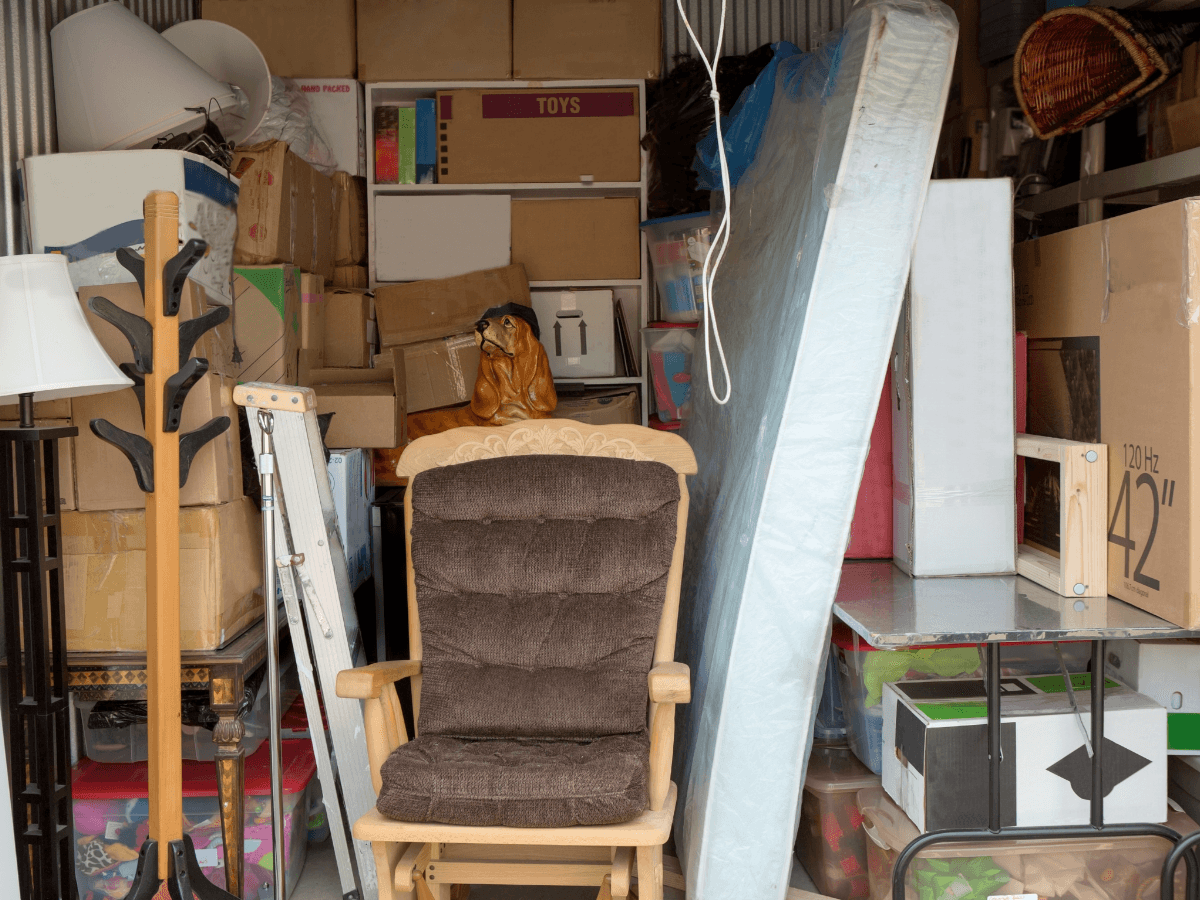
Most storage units start the same way: you needed a temporary place to put things during a move, a renovation, or a family transition. "Just for a few months," you told yourself. Then a few months became a year, and a year became several. The monthly bill kept getting paid, and the unit kept sitting there, packed floor to ceiling with things you haven't touched since the day you locked the door.
If that sounds familiar, you're not alone. There are more than 50,000 self-storage facilities in the United States, and a significant portion of rented units are paid for by people who can't quite remember what's in them. The average monthly cost ranges from $100 to $300 depending on size and location — which means a unit you've had for three years may have cost you $3,600 to $10,800 to store things you might not even want anymore.
The good news: clearing it out is more manageable than it feels, especially when you have a plan. Here's how to approach it.
Step 1: Go In With a Plan, Not Just Willpower
The biggest mistake people make when tackling a storage unit is showing up without a system. They open the door, feel overwhelmed by the volume of stuff, and leave having moved three boxes and accomplished nothing. Willpower alone won't clear a 10x20 unit.
Before you go in, make a plan for where things can go. You'll need at least four categories: Keep, Sell, Donate, and Trash. Write them on sticky notes and put them on the outside of the unit door so you can see them while you work. Bring boxes or bags to sort into immediately — don't just make piles on the floor of the unit or you'll create a second layer of chaos on top of the first.
Set a realistic time goal. A full storage unit typically takes a full day of focused work to sort, and another day (at minimum) for removal. Plan for both.
Step 2: Work From the Door Inward
Always start at the entrance and work your way back. This is partly logistical — you need a clear path to reach things deeper in the unit — and partly psychological. Making visible progress from the start keeps you motivated to continue.
As you pull items out, make decisions immediately. The worst thing you can do is create a "maybe" pile, because maybe piles have a way of becoming keep piles. If you haven't used something in the time it's been in storage, there's a very good chance you don't need it. Apply the question: "If I didn't already own this, would I go out and buy it?" If the answer is no, it doesn't need to come home with you.
For items that clearly have value — furniture, tools, antiques, collectibles, electronics in working condition — photograph them as you go. This will be useful later whether you're selling them online, getting an appraisal, or calling a reseller.
Step 3: Know What's Actually Worth Selling
People routinely underestimate the value of what's in their storage unit, and equally routinely overestimate it. Knowing the difference will save you time and help you make better decisions about what deserves the effort of selling versus what should be donated or trashed.
Items that tend to have strong resale value include solid wood furniture (especially antiques or vintage pieces), power tools and hand tools in working condition, vintage or collectible items, musical instruments, sporting equipment, and quality kitchenware. Items that are usually not worth the effort of individual resale include particle board furniture, most electronics older than five years, clothing without brand value, and anything damaged or broken.
If you're unsure about a category of items, a professional reseller can give you a quick assessment. At Attic Overflow, we do free on-site evaluations — we'll tell you honestly what has resale value and what the best path forward is, without any obligation to use our service.
Step 4: Handle Donation Efficiently
Donation is often the fastest way to get rid of good-condition items that aren't worth individual resale. Clothing, household goods, small appliances, books, and furniture in decent shape can all find a second home through local donation centers.
The key is not to let the donation step become a bottleneck. Have a vehicle available (or schedule a donation pickup) so you can move things out the same day you sort them. Items that sit in your driveway or garage after being pulled from the unit have a way of creeping back in through the door.
Many donation centers in the Frederick, Montgomery, Carroll, and Howard County areas offer free scheduled pickups for furniture and larger loads. Call ahead to confirm what they accept and whether a pickup is available on your timeline.
Step 5: Decide What to Trash — and How
Not everything in the unit will be suitable for resale or donation. Broken furniture, water-damaged items, old paint and chemicals, and worn-out clothing will need to be trashed or disposed of properly.
For small amounts, your regular trash pickup may handle it over a few weeks. For large volumes — furniture, mattresses, bulk boxes — you'll need either a dumpster rental or a professional hauling service. In Maryland, certain items like paint, batteries, and electronics require special disposal; check with your county's waste management for drop-off locations.
If you're dealing with a full unit and the volume of trash is significant, a single call to a clean-out service can handle everything in one trip rather than you making multiple runs to the dump.
When to Call a Professional
There are situations where doing it yourself is the right call — a small unit, a clear weekend, items you want to personally sort through. But there are also situations where a professional clean-out service saves you more time, money, and stress than the cost of the service itself.
Consider calling a professional if: the unit is large (10x20 or bigger) and fully packed; you don't have reliable help for heavy lifting; you're managing this from a distance while the unit is in a different area; you're dealing with a loved one's belongings and the process is emotionally difficult; or you simply don't have the time to manage a multi-day project.
At Attic Overflow, we handle storage unit clean-outs throughout Frederick, Montgomery, Carroll, and Howard Counties in Maryland. We meet you at the facility, sort through what's there, pull out anything with resale or donation value, and remove the rest — leaving the unit completely empty and swept. For many of our customers, what we recover in resale value comes close to covering the cost of the clean-out itself.
The Math on Ending a Storage Bill
Here's a calculation worth making. If you're paying $150 per month for your unit, that's $1,800 per year. A professional clean-out that costs $400 to $600 pays for itself in three to four months — and then keeps paying you back every month after that for as long as you would have otherwise kept the unit.
Even if you pay more than you recover in resale value, the relief of closing that chapter and ending that monthly drain is real and immediate. Almost everyone who clears a long-term storage unit describes a feeling of lightness afterward that is hard to put a price on.
If you've been putting this off, now is a good time. The unit isn't going to sort itself, and the bill isn't going to stop. Give us a call for a free estimate and we can tell you exactly what a clean-out would look like for your situation.
Ready to get started?
Attic Overflow handles garage & storage clean-outs throughout Frederick, Montgomery, Carroll & Howard Counties, Maryland. Free estimates, no obligation.